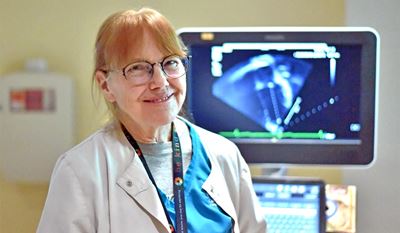
Shannon Knaggs, APRN, a pediatric nurse practitioner at New Haven’s Augusta Lewis Troup School School-Based Health Center (SBHC), has used a different approach to studying and addressing high blood sugar in children with elevated body mass index.
Nearly a decade ago, Shannon Knaggs, APRN, was at a school talk where a dietitian was sharing information with family members about the importance of nutrition in preventing diabetes.
A grandmother in the audience spoke up.
“This is great information, but it’s too late for me,” she said. “Who’s telling our kids about this?”
That comment “gave me chills,” recalled Knaggs, a pediatric nurse practitioner at New Haven’s Augusta Lewis Troup School School-Based Health Center (SBHC). In 2016, concerned about the link between obesity and diabetes, Knaggs began exploring ways to approach the issue.
Experience had taught him that many parents didn’t respond well to discussions about their children’s weight, so he took a different tack. Knaggs received a grant for a point-of-care hemoglobin A1C testing machine to measure blood sugar. He began testing SBHC children whose parents and guardians approved their participation and logging results to monitor trends.
Ranbir Mangat Bains, APRN, PhD, a nurse practitioner at New Haven’s Barnard Environmental Magnet SBHC, learned about Knaggs’ work. She received approval to turn it into a research study and she and Kelly Nicholson, RN, PhD, Yale New Haven Health nurse scientist, analyzed Knaggs’ data. Last year, the nurses presented a poster at Yale New Haven’s Janet Parkosewich Nursing Research Conference.
The study showed that out of 321 children with an elevated body mass index (BMI), 40 percent had A1C levels at or above the prediabetes threshold. According to the study, these findings highlight the value of point-of-care A1C testing at SBHCs in identifying type 2 diabetes risk early, enabling timely referrals to nutrition and endocrine specialists. They also illustrate the importance of education on diabetes-prevention nutrition and lifestyle changes, which Knaggs offers SBHC children and their parents.
“I don’t talk to parents about their children’s weight, because the information and interventions for elevated A1C are the same as for overweight or obesity,” Knaggs said. “When parents learn that their child’s A1C is high, they tend to be more engaged. I have had parents call and ask me to check their child’s blood sugar. Some have been able to help reduce their children’s A1C.”
Carla Giles, manager of Children’s Community Programs, YNHH, noted that the hospital now has A1C testing equipment in several SBHCs.
“When Shannon shared his vision with me in 2016, I knew this was important and valuable work,” she said.
The A1C project is one of many examples of APRNS’ critical role in preventive care and how SBHCs can help mitigate long-term health risks for children, Bains said.
“It’s so important to have school-based health centers in the community because they’re places where parents and kids can easily access health information and care,” Bains said. “They look at us as an extension of their support system. Parents tell us all the time, ‘We’re so glad you’re here.’”