Published March 26, 2026

Every winter, hospitals nationwide see their patient experience scores drop, due to spikes in respiratory illnesses, weather-related injuries and other factors that contribute to surges in volume.
Yale New Haven Health hospitals were no exception, so this year, the Patient Experience department has taken a proactive approach to maintain positive patient and family experiences in our emergency departments and inpatient units during surges.
“Our goal is to reduce patients’ uncertainty, maintain their dignity and provide a compassionate presence, even when resources are stretched,” said Tina Bennett, executive director, YNHHS Patient Experience.
Patient Relations, Spiritual Care, Language Services, Guest Services and Volunteer Services have increased their efforts, particularly during ED peak hours and in overflow areas. These departments now have a “playbook” listing surge priorities. For example, Patient Experience staff focus on setting patients’ expectations around delays, intervening early when patients express frustration and de-escalating situations when needed.
YNHHS Patient Experience has also implemented new measures, sharing a “surge tip of the week” during each delivery network’s Morning Safety Report, and developing a Surge Toolkit for clinical leaders and frontline staff. The toolkit, available in the Patient Experience section of YNHHS’ employee intranet, provides scripting, tips and best practices.
In addition to YNHHS efforts, each delivery network has implemented its own measures to enhance patient communication and comfort during surges.
On a regular day, Darius Carlton, patient relations representative in Bridgeport Hospital’s ED, rounds to answer patients’ questions, address concerns and help with non-clinical requests. During a surge, his role as a liaison between patients and staff becomes even more critical.
“Darius connects more frequently with department leaders, flow coordinators and other staff to ensure more immediate support to patients, especially those in hallways or overflow areas,” said Johanna M. Gonzalez, LMSW, manager of Patient Relations at Bridgeport Hospital. “In addition to supporting patients, this helps the ED staff by alleviating some of the pressures they face during peak volumes.”
By keeping patients informed about their care and delays, Patient Experience staff provide “an added layer of communication that helps us maintain trusting relationships with our patients,” added Lisa Maciejak, RN, patient services manager, Yale New Haven Hospital York Street Campus Adult ED.
At all YNHHS hospitals, additional comforts help patients facing long waits. These include extra blankets, phone chargers, and, if appropriate, snacks. Lawrence + Memorial Hospital volunteers round with a cart containing magazines and decks of cards. Maciejak noted that aromatherapy patches and Reiki sessions with volunteers have made a big difference for YNHH ED patients. One patient shared that she was initially skeptical about Reiki but gave it a try.
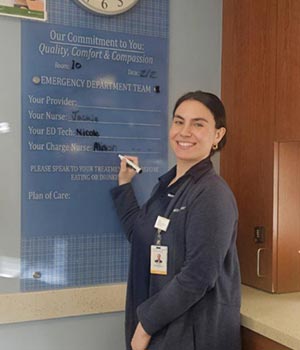
“After a while I felt like my whole body just calmed down. I felt this calm and this peace in me,” the patient said. “They took my blood pressure after and it was the lowest they’d seen it.”
Greenwich Hospital recently partnered with a company called Best Upon Request to offer an Emergency Department Concierge Program. Trained concierges offer additional communication with patients and provide non-clinical assistance and comfort items.
“We continue to see sustained, high patient volume, and we wanted to show our commitment to delivering a compassionate, seamless patient experience,” said Bob Blenderman, PA, Greenwich Hospital president. “Partnering with Best Upon Request allows us to expand the support we provide to patients and families during some of their most vulnerable moments, while also giving our clinical teams the time and space they need to focus on what they do best.”
So far, the multi-pronged approach to maintaining a positive patient experience during surge is working. Patient experience scores have held steady this winter.
Said Bennett, “Our efforts are showing that when it comes to the patient experience, every moment matters – even during surge.”