Now in a new location, Tele-ICU team marks 10 years of growth and innovation
Published October 23, 2025
YNHHS leaders recently joined Tele-ICU team members at the program’s new location, the Digital Health Hub at 99 Hawley Lane in Stratford.
In 2015, Yale New Haven Health launched the Tele-ICU to help ensure critically ill patients receive an extra level of expert care overnight.
What began as a program for ICU patients at Greenwich Hospital and Yale New Haven Hospital’s Saint Raphael Campus has since grown into a vital service for patients throughout the health system and beyond.
This past summer, the Tele-ICU team moved from a YNHH-based center to YNHHS’ new Digital Health Hub at 99 Hawley Lane in Stratford – marking another milestone in the program’s continued growth.
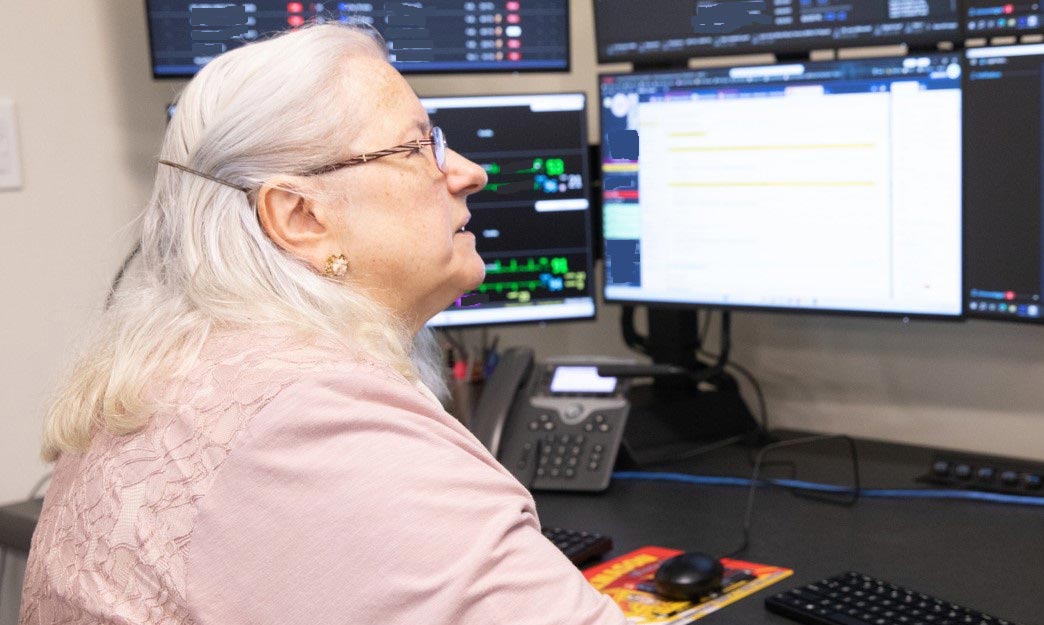
From 7 pm - 7 am, Tele-ICU intensivist physicians, critical-care nurses and advanced practice providers monitor patients from the hub, using audiovisual technology, real-time data from bedside monitors and test results and other information from the electronic medical record. The Tele-ICU team collaborates with bedside teams to enhance care coordination and quickly intervene when patients deteriorate.
In 2017, the Tele-ICU program expanded to patients at YNHHS’ Westerly Hospital and at Day Kimball Hospital in Putnam, which is not part of the health system. During the COVID-19 pandemic, the Tele-ICU quickly shifted to support all YNHHS delivery networks. At the height of the pandemic, the Tele-ICU team was providing 24/7 coverage and playing a crucial role in managing the surge of critically ill patients.
The program’s impact can also reach beyond traditional ICU settings. For example, portable equipment allows Tele-ICU clinicians to assist emergency department patients who need critical care but have not yet transferred to the ICU. At Lawrence + Memorial and Westerly hospitals, Tele-ICU nurses use eCART software to identify patients at risk of clinical deterioration. A Tele-ICU pilot program screens non-ICU patients with elevated lactate levels, which can indicate insufficient oxygen.
“The Tele-ICU program has become a cornerstone of critical care across the health system,” said Jonathan Siner, MD, medical director, Tele-ICU, and clinical section chief and associate professor of Pulmonary, Critical Care and Sleep Medicine at Yale School of Medicine. “We’re proud of the program’s legacy of innovation, and we look forward to continuing to improve patient outcomes.”
Anne Chepulis, RN, is among the critical-care clinicians who staff YNHHS’ Tele-ICU, providing remote monitoring of patients and supporting bedside teams when interventions are needed.