Published August 06, 2025

Several years ago, 37-year-old Ashley Clayton was fighting a dark battle with severe depression.
“I was incredibly suicidal at that point and really struggling to stay alive,” said Clayton. “It was hard to concentrate at work or even just having a conversation with my husband or my friends. It was so effortful to try to stay engaged.”
She tried everything she could – antidepressants, therapy, exercise and even electroconvulsive therapy also known as ECT. None of it worked until she decided to enroll in a clinical trial with Yale for Ketamine treatment.
“Roughly 25 years ago, the first study was done at Yale looking at Ketamine to depression in patients and had dramatic results,” said Robert Ostroff, MD, co-medical director of Interventional Psychiatry Service (IPS) at Yale New Haven Psychiatric Hospital.
According to Dr. Ostroff, Ketamine has been around for approximately 50 years as an anesthetic agent and has been used to put patients to sleep for surgery and pain treatment, but research pioneered at the Yale School of Medicine (YSM) has allowed Ketamine to treat many mental health conditions resistant to other forms of therapy. Ketamine can be administered intravenously or as a nasal spray.
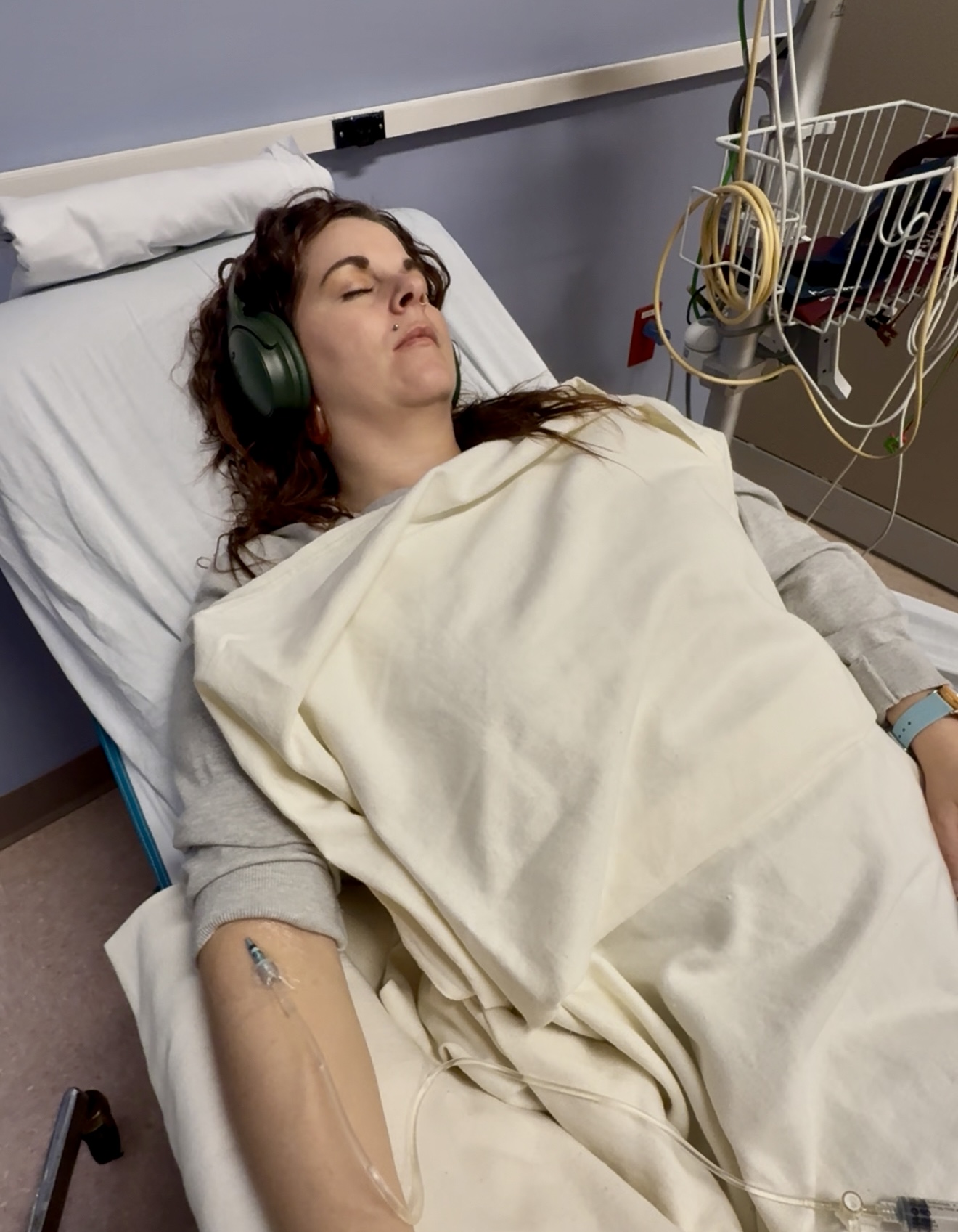
Dr. Robert Ostroff added, “The side effects are usually mild. The most common side effect is sedation. Some people have out-of-body experiences where they feel a disassociated sense of themselves. On rare occasions, people have what we call psychedelic experiences.”
Clayton and Dr. Ostroff met roughly nine years ago, and he has been monitoring her progress ever since. To Clayton's surprise, after her first Ketamine treatment – the effects were immediate.
“I felt like myself. I felt like I had been restored back to this not depressed version of myself,” added Clayton.
She now receives treatment for maintenance purposes to ensure her depression is kept at bay while practicing her self-care routines. “I truly believe I’m only still here because I got access to this treatment,” explained Clayton.
Ketamine works differently from typical antidepressants. While most medications take weeks to improve symptoms, Ketamine can often bring relief within hours or days. It can help reset certain pathways in the brain that affect mood, thoughts, and emotions. Ketamine will have longer effects compared to typical anti-depressants.
Ketamine targets a chemical in the brain called glutamate, which plays a key role in how brain cells communicate. By affecting glutamate and its receptors, Ketamine helps the brain form new connections by rebuilding pathways that may have been damaged by long-term stress or depression. This process is called neuroplasticity, and it is what helps many people feel relief.
There are two main forms of Ketamine treatment:
Yale New Haven Psychiatric Hospital provides Ketamine treatment adhering to strict clinical protocols. Prospective patients receive a comprehensive evaluation by a Yale Medicine interventional psychiatrist and must be cleared to receive the treatment.
When given in a medical setting by trained professionals, Ketamine is considered safe and well-tolerated. Some people may experience side effects like dizziness, nausea, or a brief sense of disconnection from their surroundings during the treatment. These effects usually wear off within an hour or so.
Patients should not drive on the day they receive treatment. Most patients can return to their normal activities the day after treatment.
Typically, a series of eight Ketamine IV treatments are given over four weeks. Some patients experience significant relief from depressive symptoms as early as after the first infusion. Most patients feel relief from depression within eight treatments.
Because of its fast-acting nature, Ketamine has shown promise for people who are struggling with severe depression or suicidal thoughts and need relief quickly.
In the early 2000s, researchers at YSM made a groundbreaking discovery: a single low dose of Ketamine could rapidly reduce symptoms of depression – even in people who had not responded to traditional antidepressants.
This was a major shift in the field of psychiatry. In several studies, more than half of participants showed a significant decrease in depression symptoms after just 24 hours.
However, it is important to keep in mind a single dose, or even several doses alone will not cure depression. Ketamine is most effective when combined with cognitive behavioral therapy (CBT), a type of therapy that focuses on the connection between your thoughts, feelings and behaviors. The idea is that when you change the way you think, you can also change the way you feel and act.
If you are a new patient seeking care with one of our interventional psychiatrists, please complete the Request for Information Form. A patient navigator from Interventional Psychiatry Services will contact you to review the referral and intake process.
Treatments through IPS, including Esketamine (Spravato), are usually reimbursed by Medicare and Medicaid, and covered by most commercial insurance. Currently, IV Ketamine infusion treatment is only covered by a limited number of insurance providers and is not covered by Medicare or Medicaid.