Published February 05, 2026

It was last January when Dave Mortimer woke up from a nap and couldn’t stop his arm from shaking. “I knew immediately I was having a stroke,” he recalled.
Mortimer, a former chief executive officer for a major corporation and now the owner of Great Neck Country Club in Waterford, was about to begin a life-altering journey – one that began with an ambulance ride to Lawrence + Memorial Hospital (L+M) and one that would end with a change of heart regarding the value of health care.
At L+M, Mortimer was put into a medically induced coma to protect his brain. The L+M team diagnosed an ischemic stroke and called for an emergency helicopter transfer to Yale New Haven Hospital.
An ischemic stroke is the most common type of stroke and happens when blood flow to part of the brain is blocked, usually by a blood clot. Because the brain is deprived of oxygen and nutrients, brain cells can begin to die within minutes.
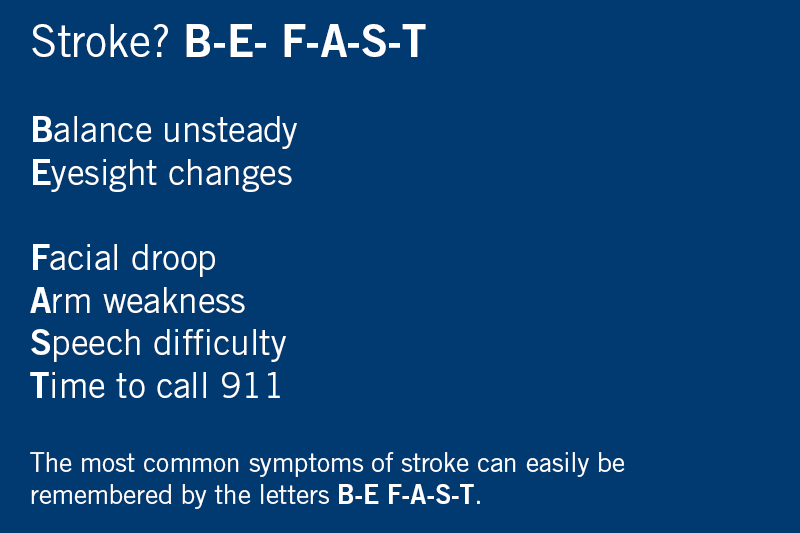
Symptoms include:
Call emergency services immediately if any of these symptoms appear, even if they go away or seem minor.
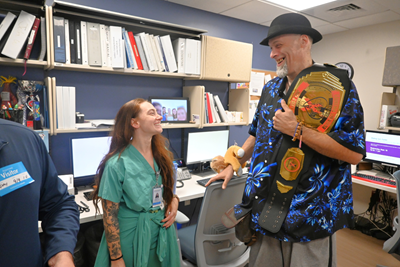
Mortimer doesn’t mince words: “I’d probably be dead if it wasn’t for L+M and Yale New Haven Health,” he said. “People have asked, did the health care you receive have a lot to do with your outcome, and I say, ‘It had everything to do with it!’ To think that I could come to L+M, get correctly diagnosed, sent to Yale – and then get the kind of care that only a few hospitals can render. What they did was amazing.”
But Mortimer was not out of the woods. After that lifesaving thrombectomy – and several weeks of intensive care at Yale New Haven Hospital – he returned to his hometown hospital to continue his journey back to a new normal; he was admitted to L+M’s Acute Inpatient Rehabilitation Unit. The L+M rehab team’s care was so impactful that Mortimer now holds an annual fundraising golf tournament in support of the rehab unit – and he personally matches whatever amount is raised by golfers and businesses.
While on the unit, Mortimer worked daily with speech, occupational and physical therapists who were determined to bring back his ability to live. He learned how to speak words his brain had forgotten. He learned how to put his socks on again.
“I’m not an easy guy,” Mortimer said. “All my life I was used to doing things my own way, and now I couldn’t talk, I couldn’t feel the right side of my body and I didn’t know my name… And to see all these people encouraging me! They cheered for me! They guided me through the rehab process. The first time I made it around the nursing station, one of the nurses was crying, she was so moved. These people – that’s how much they care. I spent my life working in factories with inanimate objects – and these people – they genuinely care about you.”
Mortimer admits now that his fiercely independent nature led him to ignore his doctor’s advice for nearly 20 years. He never took his blood pressure medication, for example. Today, after all he’s been through, he has a different perspective.
“I think you should team up with your doctor to develop the best plan for you,” he said. “I didn’t do that. But now I do what they say. Because let me tell you, I feel very indebted to all the people who helped me. I try to take care of myself because I don’t want to disappoint everyone who helped me get my life back.”
That sense of indebtedness includes supporting his local hospital. “Don’t take your hospital for granted,” he said, “because you never know when it’s going to be you or a loved one who needs it. It’s incumbent on all of us to do what we can. I feel fortunate that I did well in life. I bought this golf course, for example, because I wanted to save it for the community. And now I have a new mission: I’ll do anything to support that Rehab Unit at L+M, because we all need to support what matters to us most.”