Published March 10, 2026

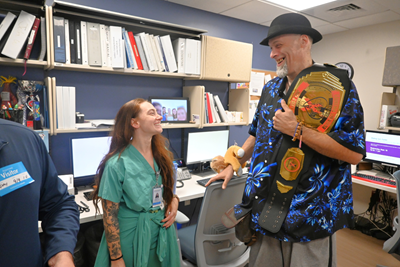
If there’s one thing Philip Hynes of Shelton wants people to know, it’s this: Don’t be afraid of a colonoscopy. It might save your life.
Hynes already knows the excuses people make when putting off a medical procedure or appointment: I’m too busy. It might hurt. I feel fine, so why do I need to go? He used some of those excuses himself.
“I wasn’t avoiding it out of fear,” he said. “It just wasn’t a priority – until suddenly it was a priority.”
The urgency came after Hynes, then 52, attended the funeral of a high school classmate who had passed away suddenly. He was shocked to discover that his friend had died from colon cancer.
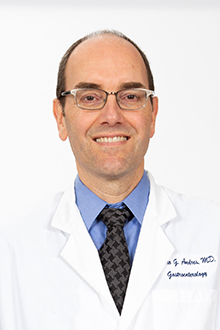
“He hadn’t had a colonoscopy until he started having digestive issues. He found out he had stage-4 colon cancer and died within a month of being diagnosed,” said Hynes. “I walked out of that funeral, called my wife and asked her to schedule a colonoscopy for me.” Hynes made an appointment with Pietro Andres, MD, a gastroenterologist with Northeast Medical Group. In the recovery room after his colonoscopy, he received what he refers to as a wake-up call.
“We found a large polyp in Philip’s colon,” Dr. Andres said. Polyps are abnormal clusters of cells that can develop as we age. They are often referred to as “pre-cancerous growths” – while they are not cancerous, they have the potential to become cancer over time.
“In Phillip's case the colon polyp was of a particularly aggressive type, so had it not been removed, he was very likely to develop cancer in a relatively short period of time,” Dr. Andres said.
Most patients will have polyps removed during their colonoscopy. Hynes’ polyp, however, was very large and located in an area that made excision during the colonoscopy impossible. He was referred to a colorectal surgeon at Bridgeport Hospital for a procedure to remove it. The recovery was uncomfortable, but Hynes is relieved and grateful that the colonoscopy spotted his polyp before it became cancerous.
“I didn’t have any symptoms that would make me think anything was wrong,” he said.
Dr. Andres explains that unlike colon cancer, colon polyps don't cause any symptoms – so you can't know if you have them without looking for them.
“I cannot emphasize enough how important it is to undergo routine colonoscopy. By the time people have any symptoms, it's usually too late to prevent cancer,” he said. Warning signs of colon cancer include rectal bleeding, bowel habit changes (i.e. persistent diarrhea or constipation), unexplained weight loss, abdominal pain and fatigue.
Because colorectal cancer is increasingly affecting younger adults, Dr. Andres recommends scheduling a colonoscopy at 45 (or younger for those with family history).
“The procedure itself is safe, effective and only takes about 15-20 minutes,” he said, adding that colonoscopy is considered the “gold standard” for colon cancer screening tests.
“At-home stool tests such as Cologuard are often offered as a convenient alternative. However, they are not designed to prevent cancer – only to detect it. Colon cancer is one of the most preventable forms of cancer. Since I would rather my patients never develop cancer to begin with, I always recommend a colonoscopy,” Dr. Andres said.
Hynes has since made a full recovery from his colorectal surgery. He will now get regular colonoscopies to make sure that he doesn’t develop more polyps. He exercises and watches his diet. And he spreads the message that everyone should get a colonoscopy screening.
“If just one person sees this and decides to get a colonoscopy, it’s worth it,” he said. “Because having a colonoscopy probably saved my life.”
Looking to schedule a routine colonoscopy? Complete our online form to receive a call from one of our schedulers (within three business days) to make an appointment.