There are many reasons why people’s legs and feet swell, but when President Donald Trump, 79, was photographed this year with swollen feet and ankles, it drew national attention to a condition called chronic venous insufficiency (CVI) – a condition that is common in people as they age.
The president’s physician reported that after Trump noticed mild swelling in his lower legs, he underwent a comprehensive exam, including diagnostic vascular studies. Tests, according to the released report, indicated no evidence of deep vein thrombosis or arterial disease, but did confirm a diagnosis of CVI.
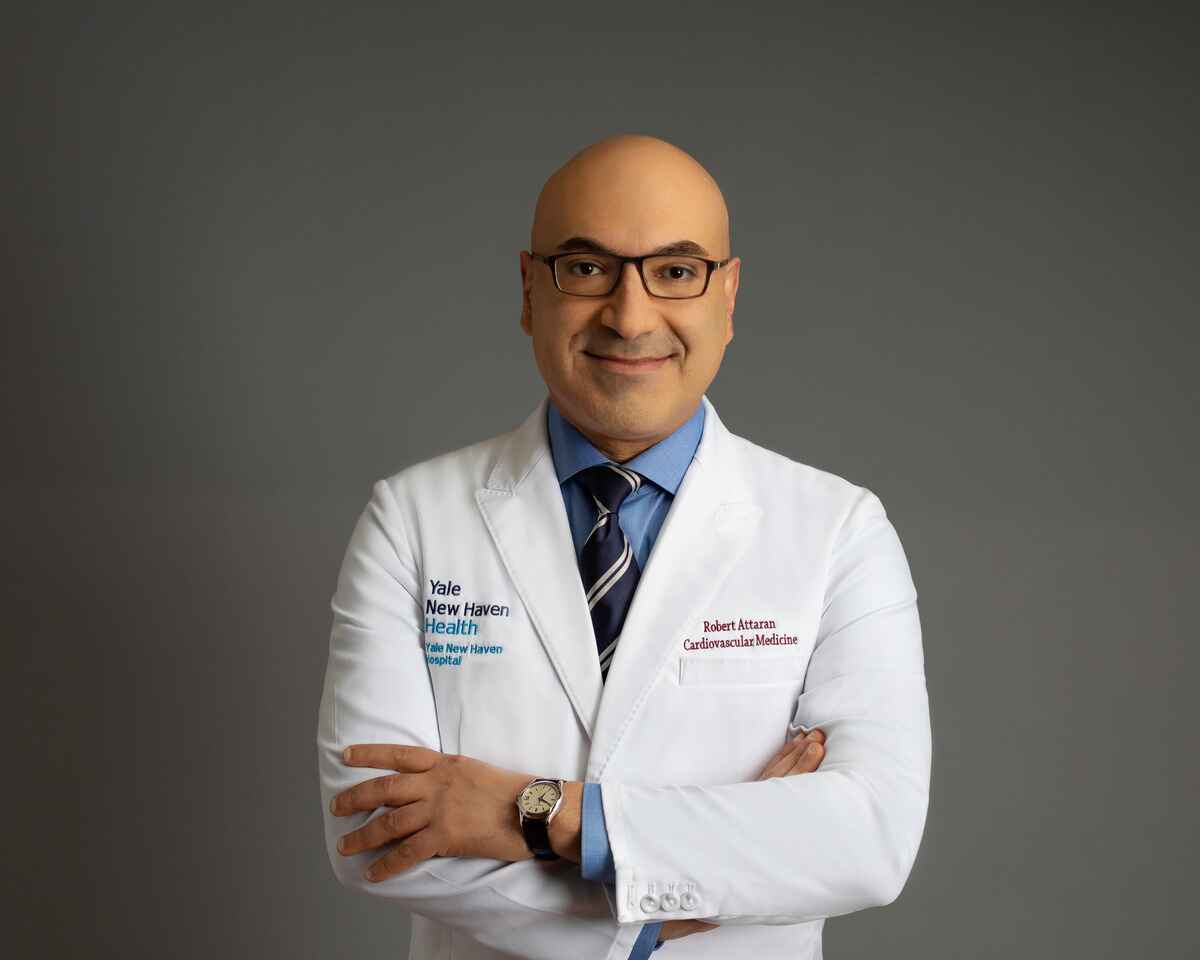
Robert Attaran, MBBS, an interventional cardiologist with the Heart and Vascular Center at Yale New Haven Health and associate professor of Medicine at Yale School of Medicine (YSM), explained that CVI is a type of chronic venous disease (CVD) that occurs when the valves in the long vein in the legs (called the great saphenous vein) stop working properly. This leads to blood pooling in the veins and increased pressure. Basically, the veins in the legs have trouble sending blood back to the heart.
“The valve in those veins is designed to encourage the blood to only flow upwards, but in many of us, those valves start to flip-flop, and so as we stand, gravity wins, and we get higher pressure in our veins,” Dr. Attaran said.
Symptoms include swelling, aching, heaviness, itching, cramping and redness or skin discoloration.
Who’s at risk?
Risk factors associated with CVI include:
- Being over 50 years old
- Sitting or standing for long periods of time
- Carrying excess weight
- Family history of CVI
- Being female
- Smoking
- Pregnancy
- Sedentary lifestyle
Chronic venous insufficiency is often – but not always – associated with varicose veins.
“You can have normal-looking legs and no varicose veins, but when people say, ‘I get cramps at night,’ or ‘my legs throb and ache if I stand for a long time, but it feels better when I put my feet up’ - those symptoms could be a signs of chronic venous insufficiency,” Dr. Attaran said.
“Interestingly, with CVI, walking helps people feel better. It’s standing that bothers them,” Dr. Attaran noted. “Because with walking, you’re pumping the calf muscle; pumping the blood back up the leg to the heart.”
Treating CVI
Treatment for CVI typically involves lifestyle changes and compression therapy. Surgery or other procedures may be recommended for more serious cases.
“If somebody has signs of venous insufficiency in its mildest form, like bronzing of the skin around their ankles or a few varicose veins – and if they have no discomfort, pain or heaviness – we don’t have to address those veins through surgery,” Dr. Attaran said. “But if they do have symptoms, we have options.”
“We learned a long time ago that if you removed the bad vein, whether it is the varicose vein or the leaky great saphenous vein, people feel better; their legs feel lighter and better,” Dr. Attaran said. “Surgery, however, is rarely necessary today since the introduction of minor catheter procedures about 15 years ago.”
Dr. Attaran explained that a catheter procedure called endovenous ablation involves the insertion of a thin I.V., the size of spaghetti, into the vein. The surgeon “zaps” the vein using heat energy, a special foam or a glue to shut the vein down. When done for the right patient for the right reason, it’s a very successful procedure to help the patient’s legs feel better, he said.
Outcomes
If left untreated, CVI can lead to chronic venous disease, which may lead to more severe complications such as painful wounds, skin ulcers and an increased risk of blood clots. That’s why it’s important to seek treatment for CVI to prevent the progression to CVD and improve quality of life.
Vascular surgery is a specialty of surgery in which diseases of the vascular system (arteries and veins) are managed by medical therapy, minimally invasive catheter procedures and surgical reconstruction. Learn more about services and appointments.