Published March 31, 2026

As a cardiologist at Bridgeport Hospital’s Heart and Vascular Center, I frequently care for patients who have experienced a stroke without an obvious cause. For many of them, often younger or middle aged adults, the uncertainty can be just as distressing as the event itself.
A cryptogenic stroke is a stroke in which no clear cause is identified despite thorough evaluation. While strokes are often associated with traditional risk factors like high blood pressure or atrial fibrillation, cryptogenic strokes account for a significant share of ischemic strokes, particularly in people who are otherwise healthy and active. For some of these individuals, an underlying heart condition called a patent foramen ovale (PFO) may play a role.
A PFO is a small, flap like opening between the upper chambers of the heart that fails to close completely after birth. In most people, it causes no problems. But in certain cases, it can allow a blood clot to pass from the venous circulation into the arterial system, where it can travel to the brain and cause a stroke. Over the past decade, multiple well designed clinical trials have shown that closing a PFO in carefully selected patients can significantly reduce the risk of recurrent stroke, compared with medical therapy alone.
Importantly, deciding whether to close a PFO is never a cardiology only decision, and it shouldn’t be. Stroke is a complex condition, and understanding its cause requires careful neurologic expertise. The Patent Foramen Ovale (PFO) Closure Program at Bridgeport Hospital is built on close collaboration with neurologists, who provide comprehensive stroke evaluation and long term follow up care. Together, we work to ensure that a patient’s stroke was truly cryptogenic and that the PFO is likely to have contributed to the event. Patients undergo comprehensive imaging, including advanced echocardiography and detailed brain imaging. Risks, benefits and alternatives are all weighed, and care is followed up with long-term stroke prevention and overall cardiovascular health.
For patients throughout Greater Fairfield County, having access to this level of specialized care close to home fills an important gap. It allows patients access to practical care, reducing the risk of recurrent stroke and letting them move forward with confidence after what can be a life-altering event. It provides a thoughtful evaluation that may uncover an opportunity not just for answers, but for prevention.
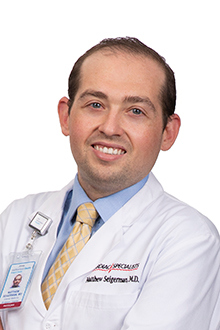
Interventional cardiologist Matthew Seigerman, MD, is a board-certified cardiologist with Northeast Medical Group. He’s dedicated to providing patient-centered care across a broad range of cardiovascular conditions. The Heart & Vascular Center at Bridgeport Hospital is part of Yale New Haven Health’s Heart & Vascular Center.