A World-Class Surgical Procedure Changed This Patient’s Life
By William Hanrahan
Published August 05, 2026
Joe O’Connell is a Connecticut State Trooper nearing retirement who admits that, for most of his life, “I thought I was invincible.”
But after the 71-year-old Salem, CT resident suffered a stroke last year, it set in motion a series of tests and procedures that changed his perspective.
In fact, O’Connell’s unexpected health journey would eventually lead to Yale New Haven Hospital (YNHH) and a date with a cardiac surgeon practicing one of the most advanced coronary artery bypass procedures in the world.
Traditionally speaking, O’Connell’s testing regimen identified the need for open heart surgery, which has long been the standard operation to address coronary artery blockages that can’t be fixed with angioplasty and stenting procedures.
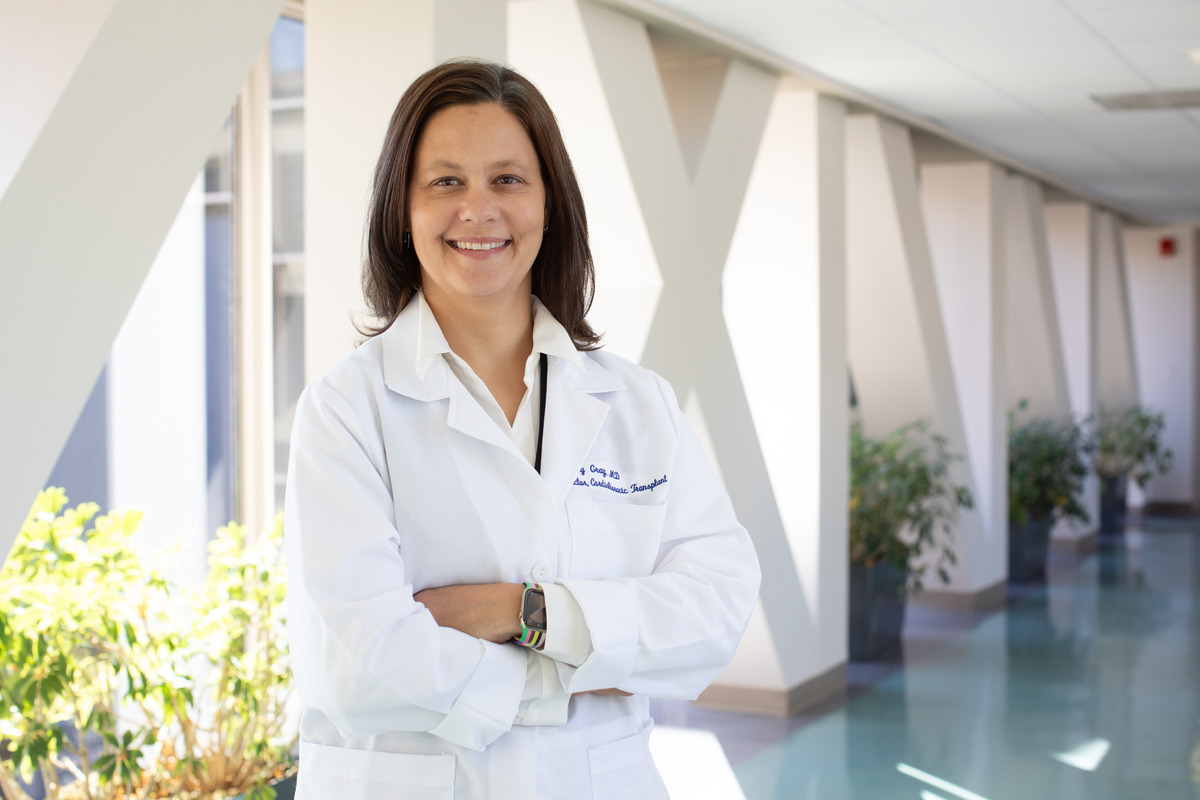
But O’Connell was in luck. At YNHH, Kelsey Gray, MD, is one of only about 15 surgeons in the world currently capable of fixing severely blocked arteries through a highly specialized robotic procedure that does not require opening the patient’s chest.Dr. Kelsey Gray
Dr. Gray is director of cardiothoracic transplant at YNHH’s Heart and Vascular Center and an assistant professor of cardiac surgery at Yale School of Medicine. The robotic procedure she performs for qualified patients is called TECAB, or totally endoscopic coronary artery bypass.
“Robotic surgery is becoming more and more common for many types of surgery, but it is still relatively new for cardiac surgery,” Dr. Gray noted. “I’ve been lucky to have the training necessary to take this next step to help our patients. The TECAB procedure is very technical and challenging, but we do it because of the many advantages it brings to our patients – for people just like Joe O’Connell. Key benefits include reduced blood loss, shorter recovery time and less post-operative pain.”
O’Connell called the entire surgical experience “science fiction,” adding that he is grateful for the care he received from Dr. Gray.
“I know that people have open heart surgery all the time, and that it is actually very safe and successful, but just the idea of it is hard to fathom,” O’Connell said. “I realize now that I was very lucky; lucky to get accurately diagnosed after my stroke, and very lucky to have been referred to Dr. Gray.”
Signs of a stroke
When O’Connell had his stroke on a Sunday morning in June of 2025, he got out of bed and saw two clocks on the wall. His double vision prompted a trip to the Emergency Department at Lawrence + Memorial Hospital (L+M) in New London where tests confirmed that O’Connell had suffered a stroke in the part of the brain that impacts vision. O’Connell would eventually get help with his vision from an ophthalmologist, but L+M’s emergency physicians also gave him a referral to see a cardiologist – Jon Gaudio, MD, with Northeast Medical Group.
Dr. Gaudio ordered a number of tests, including a stress test, the results of which led O’Connell back to L+M’s Heart and Vascular Center for a cardiac catheterization procedure called an angiogram. In the Catheterization Lab, Michael Nanna, MD, an interventional cardiologist with Yale New Haven and L+M hospitals and assistant professor with Yale School of Medicine, used X-ray technology and contrast dye to look for blockages in O’Connell’s coronary arteries. In some cases, interventional cardiologists like Dr. Nanna can use a balloon angioplasty procedure and a stent to fix blockages in real time during the procedure, but not always.
“Dr. Nanna told me I had an 85 percent blockage in one artery and a 95 percent blockage in another artery,” O’Connell said. “I’ve always been active and I’d never had a symptom of any kind, so this was eye-opening to me. That’s when he made the referral for me to see Dr. Gray.”
What is TECAB surgery?
It wasn’t long before O’Connell was scheduled for his TECAB procedure. Dr. Gray uses robotic-assisted instruments and a high-definition endoscopic camera inserted through small incisions in the chest. She then manipulates the robotic controls from a console to precisely cut and sew into place new vessels to bypass blockages and restore normal blood flow.
After it was over, O’Connell enrolled in the Cardiac Rehabilitation program at L+M Hospital, regaining his strength and learning from his therapists about ways to take the best possible care of his cardiovascular health going forward.
He’s also taking several new medications, including a statin to lower his cholesterol. “I remember watching my father-in-law and my father – they both had these little pill caddies – and I used to say, ‘Boy, that’ll never happen to me!’” O’Connell said with a laugh. “And now I’ve got my own little pill caddy. It’s funny. I guess I’m old now.”
But not really, because O’Connell is back in business. He’s back at the gym, and he’s back lifting rocks and cutting trees on his property where he enjoys landscaping.
Dr. Gray, of course, is back in the operating room; she’s completed more than 50 TECAB cases in the past year, enhancing Yale New Haven Hospital’s reputation as an academic health center and destination site for minimally invasive cardiac procedures.
“It’s amazing what she can do,” O’Connell said. “Dr. Gray is an amazing doctor and I was very fortunate to have her as my surgeon.
“And the one thing I learned from all this,” O’Connell added, “is that you have to take care of yourself. It’s important to get checked out, because, really, no one is invincible. And if you have any symptoms of anything, absolutely get checked out. Because it’s truly remarkable what modern medicine and the skilled professionals can do for us these days. I mean, they saved my life.”
Yale New Haven Health’s free monthly email newsletter features the latest content from our consumer wellness blog News & Knowledge. Articles cover topics including trending health issues, prevention and treatments featuring experts you can trust.