Early Onset Cancer Program: Care and Community for Younger Patients
By Amy Brenner-Fricke
Published June 15, 2026
Getting diagnosed with breast cancer at 39 hit Monique Morrison like a lightning bolt.
She felt a lump in her breast but assumed it was just a cyst. She had no history of breast cancer in her family that would indicate she should be concerned. It was her mother who insisted she get a mammogram. That led to another, and then an ultrasound, and then a biopsy – and the diagnosis in August 2024 of triple-negative breast cancer.
“When I first heard the words breast cancer, my world stopped,” she said.
Cancer isn’t on the minds of most young adults because many types of cancer are traditionally more common in older adults. Cancer diagnoses in younger adults like Morrison, however, have been rising, with notable increases in colorectal, cervical, breast, thyroid, skin and testicular cancers.
Early onset cancers may be biologically different, respond differently to traditional treatments, and are sometimes more aggressive than later-onset cancers. These cancers may also be more advanced at diagnosis, as patients are too young to have started routine screenings. Additionally, younger individuals may not prioritize regular healthcare visits, have family discussions about cancer history, or share new and concerning symptoms with their primary providers.
After her diagnosis, Morrison was referred to the Early Onset Cancer Program at Smilow Cancer Hospital. The program provides specialized care and support for patients diagnosed with cancer between the ages of 18 and 45. It’s the first of its kind to serve all patients with early onset cancer, regardless of type, from one centralized resource hub – and the only one in Connecticut.
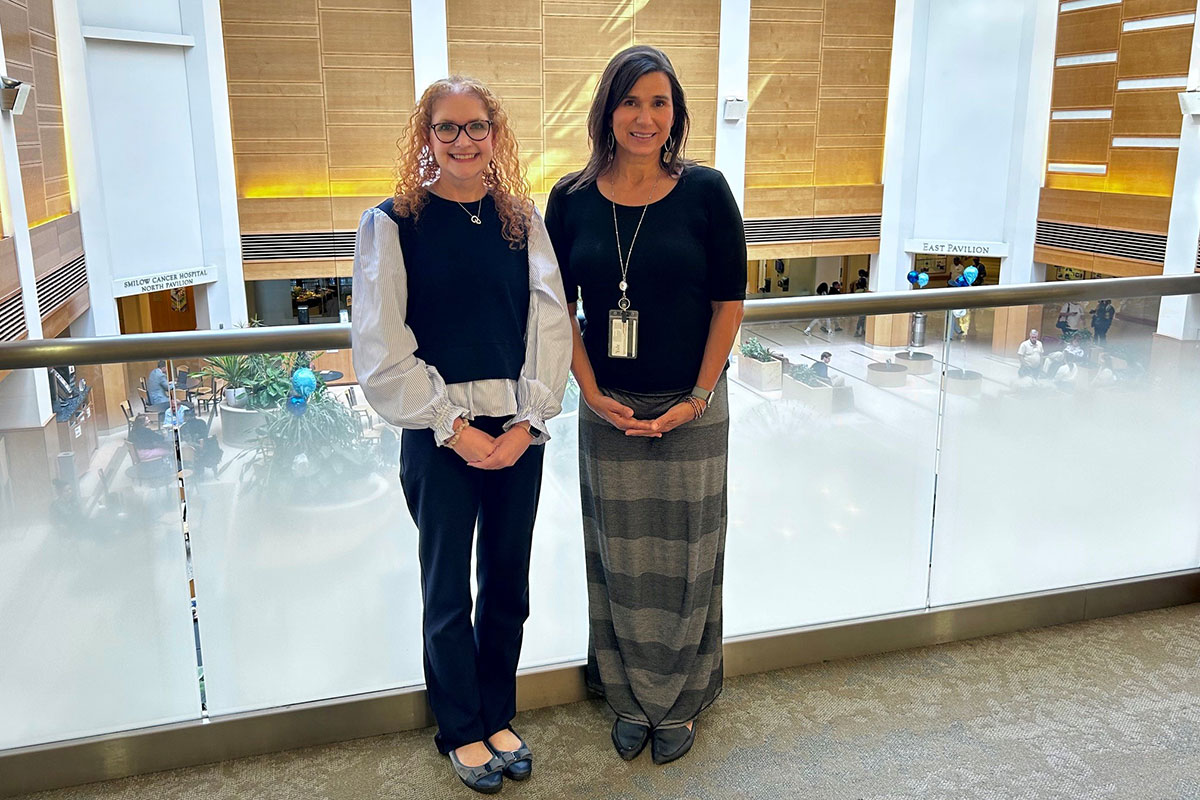
Jamie Reedy, manager of the Early Onset Cancer Program at Smilow Cancer Hospital, and Karen Geary, early onset cancer specialist
“Our mission is to reduce the burden of cancer and improve the quality of life for patients with early onset cancer and their families and supporters,” said Jamie Reedy, program manager of the Early Onset Cancer Program. ”A dedicated program is vital because younger patients have unique needs that traditional cancer programs are not designed to support.”
The program’s initiatives span patient- and family-centered support, research, community outreach and clinical education.
“We work with patients to identify their specific needs, such as managing life with cancer (parenting, changes at work or school, or other responsibilities), finding resources for practical needs and financial strain, and navigating cancer's impact on children and relationships,” Reedy said.
The Early Onset Cancer Program also covers information about nutrition, movement, wellness, self-care, intimacy and body image; a dedicated art therapy program; educational webinars and events; personalized navigation and resource coordination; and specialized early onset cancer support groups in partnership with the social work team at Smilow Cancer Hospital.
Karen Geary, an early onset cancer specialist with Yale Cancer Center, connected Morrison with federal and nonprofit resources that helped her address the myriad financial impacts of a cancer diagnosis. Additional resources that Morrison found relevant offered tips for parenting children while navigating cancer treatment. “The Early Onset Cancer Program helped me in so many different ways – financially, physically and with emotional support,” she said.
The shock of an early onset diagnosis is a message that Morrison has taken to heart – and into her own community. After successfully completing her chemotherapy, surgery and radiation, she shares her story and advocates for other young women who may be at risk, spreading awareness about breast cancer and the importance of self-examinations and regular mammogram screenings.
“I learned a lot throughout my journey, including the power of faith, prayer and community support – and most especially the value of early detection,” she said. “Everyone should be proactive about their health. Don’t ignore changes in your body.”
To learn more about the Early Onset Cancer Program, call 203-785-4831.
Yale New Haven Health’s free monthly email newsletter features the latest content from our consumer wellness blog News & Knowledge. Articles cover topics including trending health issues, prevention and treatments featuring experts you can trust.