Published May 27, 2026

For a man in his mid-30s from northern Fairfield County, Connecticut, daily life once revolved around fear.
“I was diagnosed with obsessive compulsive disorder, with themes around health, safety and contamination,” he said. “I would constantly think something terrible was about to happen like my boiler exploding and hurting my family. The only way I could get relief was by checking it over and over again.”
What began as intrusive thoughts quickly evolved into something much more consuming. Over time, his compulsions took over his daily routine.
“I spiraled mentally for about six months,” he said. “The thoughts were getting worse every day. I was in a constant state of fight or flight.”
At the same time, his mental health declined.
“I became severely depressed. I couldn’t taste my food. I didn’t enjoy my hobbies anymore. My family noticed I just wasn’t the same person, the one always dancing and singing around the house.”
For the first time, he began having frightening thoughts about not wanting to be alive.
Although he had been working with a therapist, it became clear that talk therapy alone was no longer enough. His therapist recommended an intensive outpatient program, specifically the REACH Program at Bridgeport Hospital, which offers a dedicated track for OCD.
“A higher level of care is often needed when symptoms continue to worsen despite outpatient treatment, or when daily functioning starts to decline,” explained Ashley Williams, LCSW, who works in the program. “Programs like REACH provide a structured environment with more frequent, targeted interventions.”
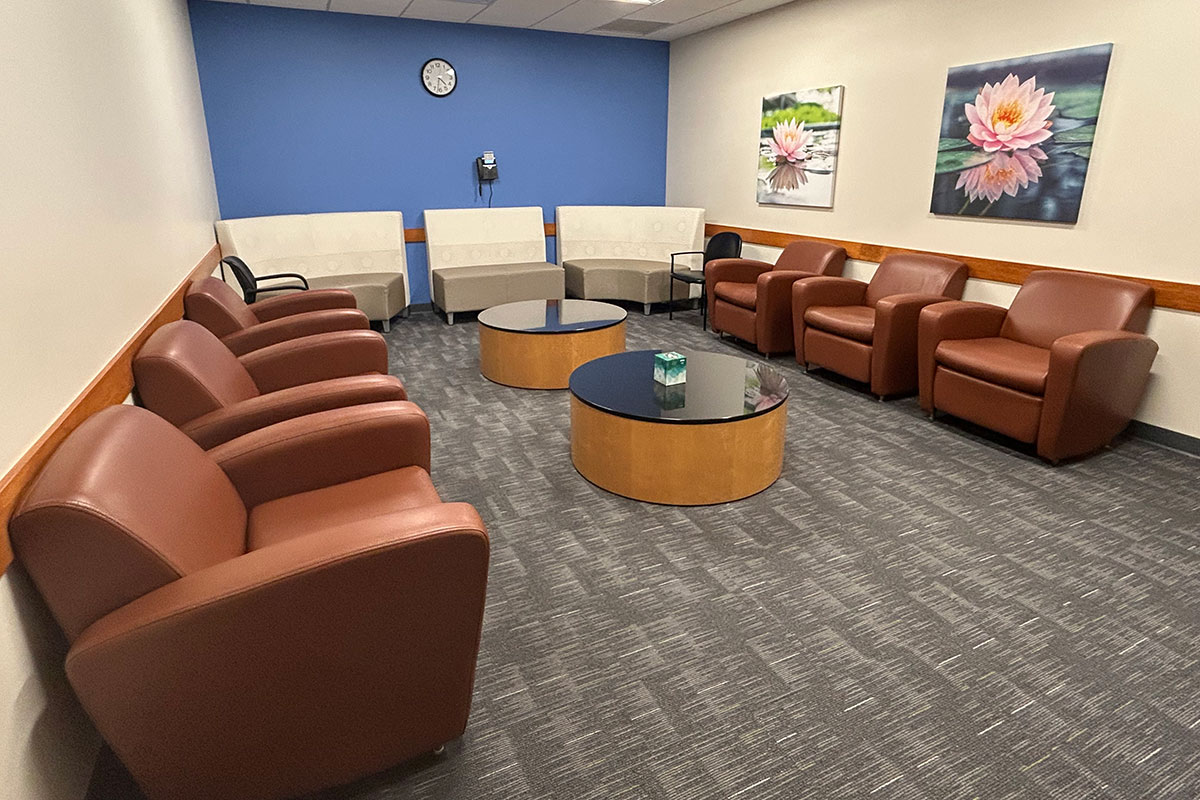
At REACH, he began Exposure and Response Prevention (ERP) therapy.
“ERP teaches patients that while they may not be able to stop intrusive thoughts, they can change how they respond to them,” Williams said.
Treatment started with building a “fear hierarchy,” a list of situations that triggered anxiety, ranked from least to most distressing.
“For me, it was things like touching surfaces I thought were contaminated,” the patient said.
These exposures were repeated and gradually intensified. At the same time, patients were asked to resist compulsions, like washing or seeking reassurance.
“There was one big rule: no reassurance,” he said. “I couldn’t ask if things were going to be okay. I had to accept the uncertainty.”
Over time, something remarkable happened.
“What once felt impossible became manageable,” he said. “Eventually, eating without washing my hands became easy.”
The REACH program also includes medication management as part of a multidisciplinary approach. Emily Criscuolo, APRN, worked closely with the patient throughout his treatment.
“When I first met him, his anxiety around illness was so intense that he struggled to take medication because he feared serious side effects,” Criscuolo said. “By the end of treatment, he was able to tolerate medication, recognize intrusive thoughts in real time and resist seeking reassurance.”
That transformation was both clinical and deeply personal.
“I don’t usually trust experts as part of my OCD,” the patient admitted. “But the REACH staff were incredible. They pushed me to my limits, but they also celebrated my wins and made me laugh.”
Today, he describes his experience in simple terms.
“Joining REACH is one of the best decisions I’ve ever made,” he said. “This program gave me my life back. I can find joy again. I’m singing and dancing around the house like I used to. I’m a better husband, a better dad.”
He now has the tools to manage his OCD and no longer feels controlled by it.
For others struggling with OCD, he offers a message of both honesty and hope.
“OCD can be a really dark place,” he said. “But this program and the people in it are a bright light. They’ll push you, but they’ll also support you in ways you can’t imagine. You might just get your life back too.”
Williams echoes that message for anyone unsure about seeking help.
“You are not alone,” she said. “With the right care, meaningful recovery is possible. Reaching out is the first step.”