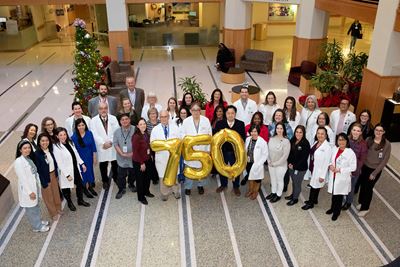
Every September, my hospital turns gold. Ribbons appear on badges, families share photographs and stories, and we remember children still in treatment, survivors growing into adulthood and those we have lost.
As a pediatric oncologist, I am grateful for that attention. I have spent my career sitting with families on the day their child is diagnosed, celebrating the end of treatment, helping survivors manage the consequences of therapies that saved their lives and sometimes having conversations that no parent should ever have to hear.
But awareness, by itself, is not enough.
Fortunately, pediatric cancer is rare. But rarity is an epidemiologic measure, not a measure of importance. Cancer remains the leading cause of disease-related death in children, and when a child dies, we lose not only a life, but decades of possibility: the graduations, careers, relationships, families and contributions that might have filled the years ahead. Entire communities and timelines are affected.
In 2026, an estimated 15,340 children and adolescents under age 20 will be diagnosed with cancer in the United States 1,820 will die from it.
For families facing cancers like this, time matters. Enormously. Promising clinical trials, however, may be hundreds or thousands of miles away. Families may have to take unpaid leave, arrange care for siblings, find temporary housing and repeatedly travel across the country simply to give their child a chance at survival.
A treatment that exists but cannot be reached is not truly accessible.
That is why Childhood Cancer Awareness Month should force a broader national conversation about how we value children with rare cancers when economics alone will never drive sufficient investment.
We need sustained federal investment in pediatric cancer research and stronger incentives to develop treatments for rare childhood cancers. We need to reduce unnecessary delays in opening pediatric trials and make participation possible regardless of a family’s income or ZIP code.
There are reasons for optimism. In 2026, the Mikaela Naylon Give Kids a Chance Act became law, strengthening federal efforts to bring promising cancer therapies to children sooner. It is an important reminder that advocacy can translate into meaningful change.
But better cancer care is about more than better cancer drugs.
A child undergoing chemotherapy may also require a psychologist for anxiety, physical rehabilitation after surgery, educational support after missing months of school, fertility preservation before treatment or palliative care to control pain and other symptoms. Parents may need help with transportation, food, insurance, employment, housing or childcare.
We call these services “supportive care.” They are a necessary part of pediatric cancer care.
A recent study of families in a pediatric oncology clinic found that 76% of those screened reported financial hardship and 21% reported food insecurity. When parents are trying to understand chemotherapy while simultaneously wondering how to pay the mortgage or feed their family, those problems cannot be dismissed as peripheral to the medical care. Ensuring they are addressed is medical care.
Our obligation extends beyond treatment. Nearly 496,000 Americans are living after a cancer diagnosis made before age 20. Survivors may require decades of monitoring for cardiac, endocrine, neurologic, reproductive, cognitive and psychological effects. Cure should not mean handing a young adult a treatment summary and wishing them well. Survivorship requires an infrastructure of its own.
National policy is essential, but states and communities also have an important role.
Here in Connecticut, Mairead Finn of the Vivienne C. Finn Foundation has helped bring together families, clinicians, advocates and community leaders to identify gaps in childhood cancer care. Mairead’s daughter, Vivienne, died in 2020 from diffuse intrinsic pontine glioma, an incurable brain tumor, giving Mairead firsthand insight into how critical it is for families to have exceptional care close to home. Families and frontline healthcare professionals are being asked what works, what doesn’t and what must change to ensure all patients receive world-class care close to home.
That input comes at an important moment, as Connecticut develops its 2027–2032 State Cancer Action Plan. This action plan creates an opportunity to ensure that children are explicitly considered in conversations about treatment, health equity, supportive care and survivorship. With the help of families of children with cancer and those who support them, Connecticut has the opportunity to show how states can translate awareness into action.
So this September, wear gold. Donate. Run the 5K. Share the photograph.
But then ask the harder questions.
Are we funding the science? Are promising treatments reaching children quickly enough? Can every family access them? Are we treating anxiety, educational disruption and financial hardship with the same seriousness we bring to chemotherapy? And are we building systems that will support survivors throughout the long lives we hope to give them?
Awareness matters. What we do with it matters more.
Vidya Puthenpura, MD, is a practicing pediatric hematologist/oncologist at Yale New Haven Children’s Hospital and assistant professor of Pediatrics at Yale School of Medicine.